Get the most from biomethane
If it is up to Europe, biomethane is the way of the future. The EU is promoting its production and the intention is to drastically increase the share of biomethane. The biomethanation process should therefore be as efficient as possible. Below, you will learn how biogas and biomethane analysers help in this regard.

Biomethane takes centre stage
The world is rapidly moving away from fossil fuels by switching to various green or renewable energy sources such as solar energy, wind, hydrogen and ... biomethane. Biomethane plays a central role in the whole energy transition. It helps with decarbonisation and contributes to security of supply when it comes to gas supply.
Many countries, industries and citizens depend on natural gas as an energy source. Similar to natural gas, biomethane mainly consists of methane (CH4). This means that biomethane can immediately replace conventional natural gas, either completely or partially. After all, they are chemically the same. Biomethane, also known as RNG (Renewable Natural Gas) comes with several advantages. One of these advantages is that it can really be produced locally anywhere for immediate use, or to be stored. This means that there is no need for new, expensive infrastructure. Biomethane is truly a green alternative to fossil natural gas.
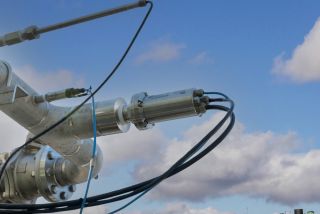
Biodegradable waste is used as the raw material for biogas. After purification, biomethane is produced which is injected directly into the existing natural gas grid. ELSCOLAB, together with VAISALA, helps everyone with optimising and efficient biogas production and upgrading to biomethane. Our MGP260 biogas and biomethane analyser is a unique optical analyser that can be placed in explosion hazardous zones (ATEX certified). The analyser is designed to be inserted directly into the process pipe and measured inline. This means there is no need for sampling and branching, which are maintenance intensive and cause delays in measurements. This robust and compact analyser also has no moving parts, which minimises maintenance.
With the right inline measurement equipment, you ensure optimal upgrading of biogas.

Starting at the beginning: biogas
You can only produce good-quality (high-energy) biomethane if you start with biogas of a good and consistent quality. It is therefore crucial to monitor the quality of the raw biogas.
Biogas is created by anaerobic fermentation of organic material. The MGP261 biogas analyser simultaneously measures methane (CH4) and CO2. If you know the ratio between the two concentrations, you can tell a lot about the proper functioning of the fermentation. This allows you to intervene, including by adjusting supply, temperature or mixing in the digester. Rising CO2 concentration goes hand in hand with falling methane concentration.
Another important parameter is the humidity content in the raw biogas. Raw biogas is saturated with water (100% relative humidity). This gas must be dried before it can be further treated in the activated carbon filter. It is therefore very important to adjust and check the gas dryer. The carbon filter removes impurities such as H2S and siloxanes. However, it only works optimally between narrow limits of relative humidity of the biogas. Humidity, or rather drying, in biogas is not only important for the carbon filter. Upgrading to biomethane is very humidity sensitive. Because upgrading from biogas to biomethane is usually done with membranes at a pressure of 10 bar or more, the dew point of the biogas must be very low. Permanent monitoring is therefore essential. Humidity control also reduces corrosion, which is an added benefit that should not be underestimated.
6 tips on how to optimise your biomethane production
-

Improve the biomethane yield.
You can optimise biogas upgrading by controlling the pressure in the membranes based on continuous inline measurement of the off-gas (CO2/CH4).
-

Provide a permanent overview of your process.
The MGP262 measures methane and CO2 in the off-gas, while MGP261 measures the same in the supply. This allows you to follow the mass balance throughout the process.
-

Reduce your energy consumption.
Just because you produce your own energy does not mean you are entitled to be careless with it! You can save energy by regulating the compressor pressure and the recirculation quantity. All you need is a CH4 analyser and a measurement of methane slip in the off-gas. This guarantees that the CH4 concentration is high enough (and therefore high calorific) without too much loss in the off-gas. Less recirculation is required, thereby reducing the energy needed to produce biomethane.
-

Ensure your membranes last longer.
Biomethane production with membrane technology is done at a pressure of at least 10 bar. At this pressure, the humidity level, or the dew point, is very important. After all, at high pressure, humidity condenses faster than you think, even at higher temperatures, which means the membranes need to be replaced faster. With the MGP261, you can be sure that the dew point is 0°C, which means that your membranes will last longer.
-

Reduce methane slip.
When it comes to greenhouse gases, we automatically think of CO2, but did you know that methane is an even stronger greenhouse gas? Methane emissions should therefore be reduced as much as possible. You can keep this under control with a biomethane analyser.
-

Check your Regenerative Thermal Oxidiser (RTO).
Sometimes you are required to reduce methane emissions to zero or near zero. An RTO is the most commonly used technology for this purpose. The MGP262 is ideal for measuring the gas stream to the RTO inline.

Newsletter
Related blog items