

From biodecontamination to validation: how to keep your biosafety cabinet reliable
A biosafety cabinet protects your employees from exposure to infectious material, prevents the contamination of samples and products, and keeps organisms, spores, and aerosols safely contained within the cabinet. Without regular maintenance and checks, you risk a false sense of security. You can learn below which steps are necessary to keep your cabinet reliable and compliant with current standards.

Start every maintenance job safely
Before commencing any maintenance or filter replacement, thorough decontamination is essential. This is often carried out using V-PHP (vapour-phase hydrogen peroxide), a biocide that disperses homogeneously throughout the cabinet, reaching even hard-to-access areas. This achieves a 6-log reduction of microorganisms on all exposed surfaces, including the HEPA filter surfaces. Once complete, no residue is left behind, as the agent breaks down into water and oxygen.
A validated decontamination process not only protects the cabinet users but also ensures that maintenance and servicing can be carried out safely.

Preventive maintenance extends the lifespan
Waiting for something to break is rarely a good strategy. Without preventive maintenance, the unit's performance gradually declines, breakdowns occur more frequently, and repair costs escalate.
During a service visit, service engineers inspect all critical components and replace parts that are subject to wear and tear as needed. If the filters need replacing, this can be done following decontamination, ensuring the cabinet can be safely returned to service quickly.
By having biodecontamination, maintenance, and validation carried out by a single specialised partner, the various interventions are optimally coordinated. This minimises biosafety cabinet downtime, simplifies scheduling, and ensures you have a single, dedicated point of contact for all technical queries.
Validation confirms that everything is working correctly
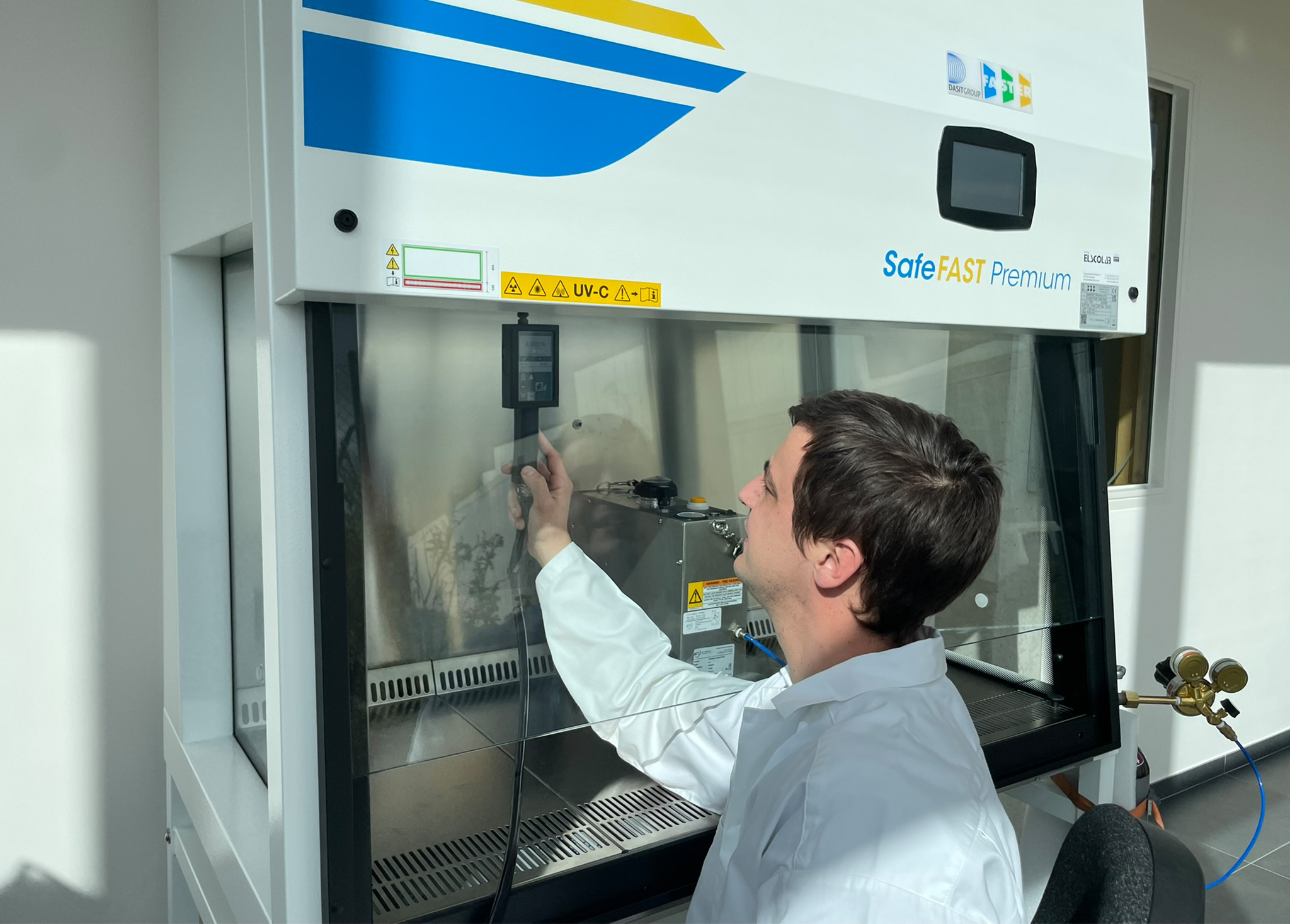
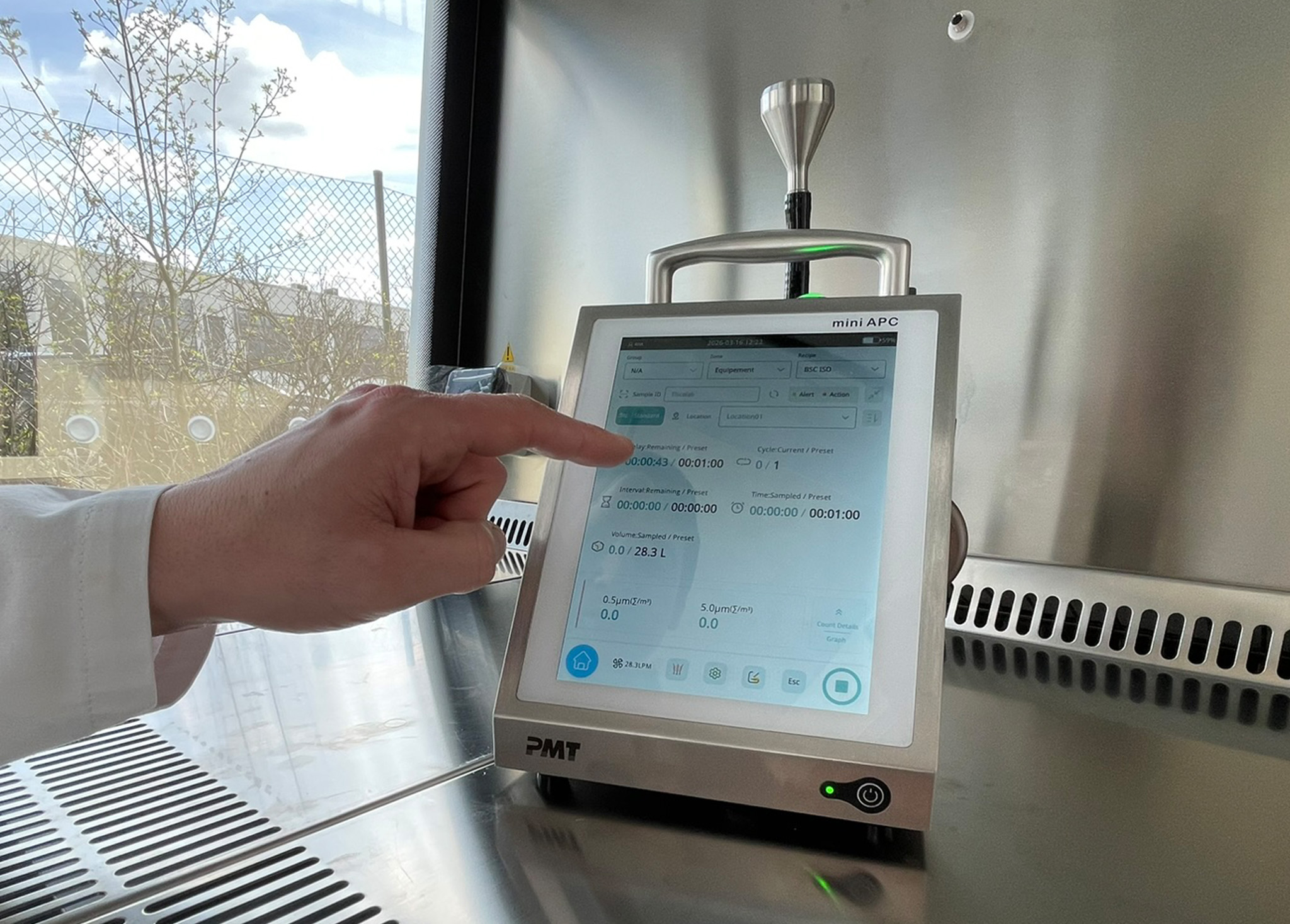
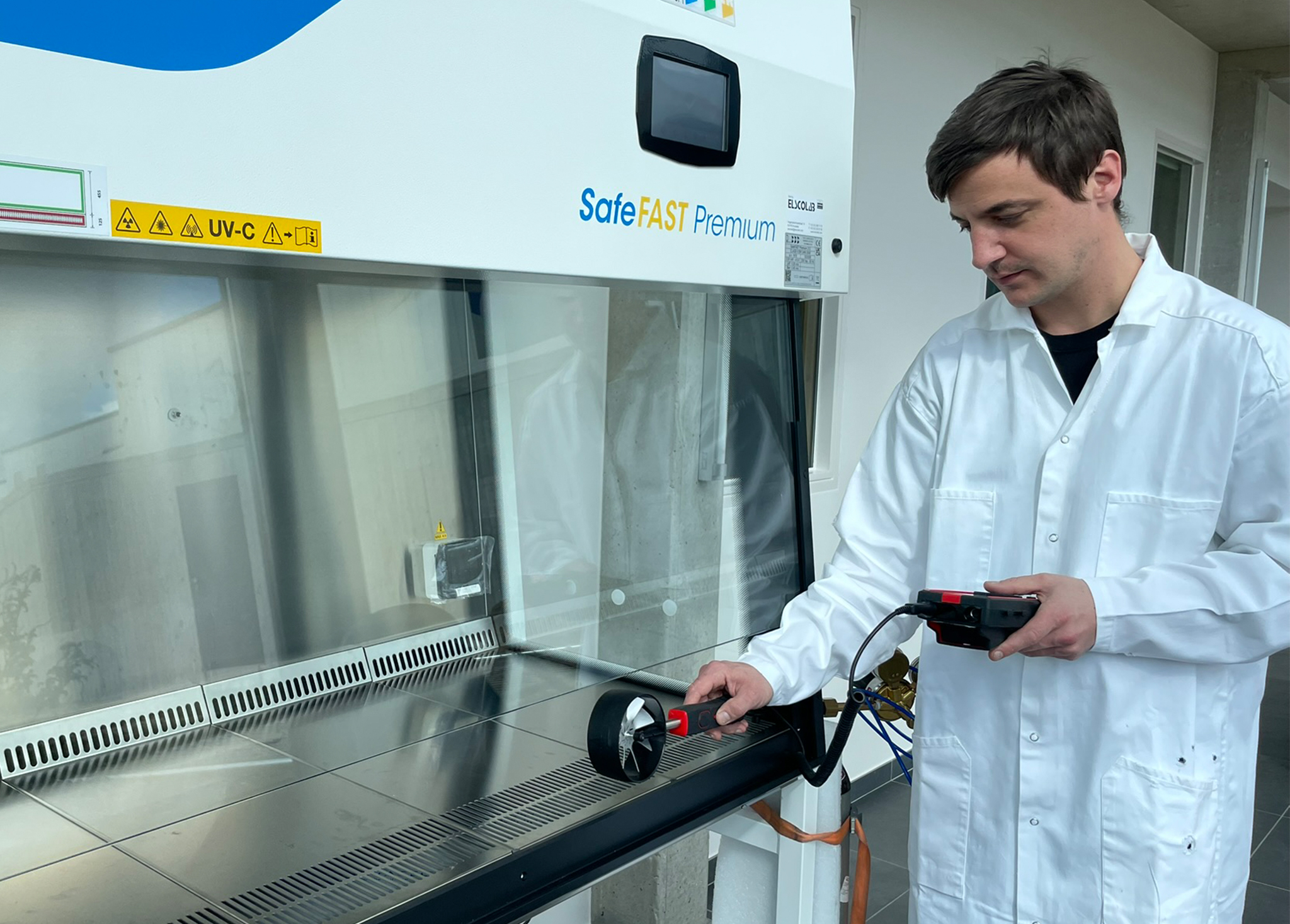
Following maintenance or filter replacement, it is crucial to verify that the cabinet still provides the required level of protection. To this end, a thorough validation is conducted in accordance with applicable standards, such as EN 12469-2:2025 for microbiological safety cabinets.
During this validation, airflows and air velocities, HEPA filter integrity, alarm functions, sensors, and particle concentrations are checked, among other things. If present, UV systems are also inspected.
The technicians carrying out these checks are fully trained and use certified measuring equipment and reference standards. This ensures that the results are reliable and that your cabinet meets the required standards.
For most biosafety cabinets, annual validation is recommended. In addition, requalification is required following relocation, maintenance work, or filter replacement.



Continuous monitoring of protection
Even between scheduled interventions, a biosafety cabinet continuously monitors its own operation. Depending on the cabinet type, sensors track airflows, filter status, and other critical parameters.
If protection is compromised, for example due to disrupted airflow or a saturated filter, an alarm is automatically triggered. This allows users to take immediate action, ensuring that both product and personnel protection (in class II cabinets) remain guaranteed.
Want to ensure the reliable operation of your biosafety and laminar flow cabinets? Contact Elscolab for tailor-made biodecontamination, maintenance and validation services.
-

Safety guaranteed with expert validation, maintenance and biodecontamination of biosafety cabinets and laminar flow cabinets.
-

Improve your safety with a suitable LAF cabinet. Discover how a proper laminar flow can protect your employees, your samples and your environment.
-

What type of microbiological safety cabinet do you actually need in your laboratory?


Newsletter
Related blog items


